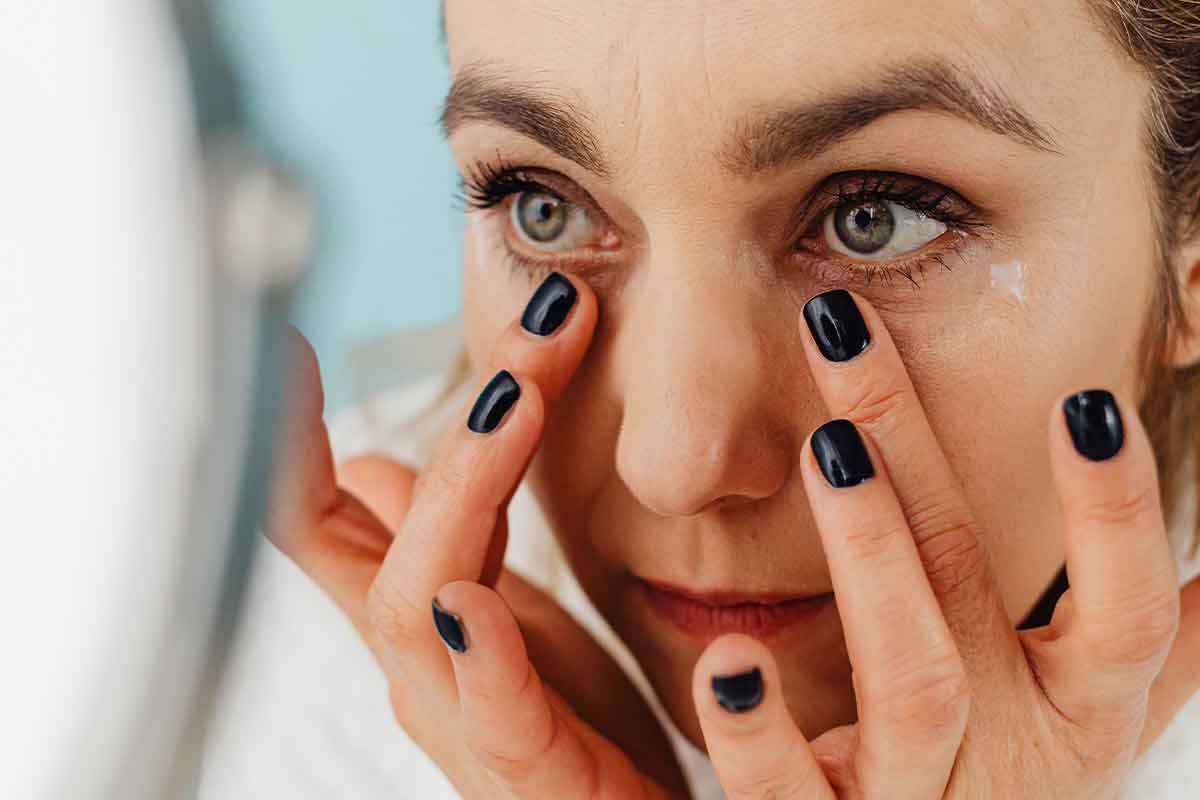
Before anything else, one point that saves a lot of disappointment: the under-eye area looks the way it does for several different reasons, and they do not all respond to the same thing. Shadowing from hollowing, pigmentation in the skin, visible blood vessels beneath thin skin, and puffiness from fluid or fat are separate causes. Working out which applies to you is the first job, not choosing a treatment.
This is general information only and does not replace a consultation. This is an injectable procedure in one of the most delicate areas of the face, and it carries real risks. A consultation is required before any treatment can be considered. This content is intended for adults aged 18 years and over.
The Science
How Platelet-Rich Plasma Works for the Under-Eye Area
Platelet-rich plasma is a concentrate prepared from a small sample of your own blood. The sample is spun in a centrifuge, which separates it into layers by density, and the plasma layer containing a higher concentration of platelets is drawn off. Platelets contain proteins called growth factors that are involved in the body’s own tissue repair processes.
Applied to the under-eye area, the proposed mechanism relates to skin quality rather than volume. The intention is to support the condition of the skin itself, which in this region is the thinnest on the face. Where the appearance of shadowing is partly due to thin, translucent skin, improving skin quality may in principle reduce how much shows through.
It is worth being measured about the evidence. Research on cosmetic PRP is still developing, preparation methods are not standardised between clinics, and the under-eye area specifically has less published evidence behind it than some other uses. A practitioner should be able to tell you plainly what is established, what is proposed, and what remains uncertain.
What it does not do. Platelet-rich plasma is not a volumising product. It does not fill a hollow. If the appearance you are concerned about is driven by loss of volume beneath the eye, this treatment is unlikely to address it, and expecting it to will lead to disappointment. Puffiness caused by fat or fluid is also a different matter again.
Some under-eye changes have medical rather than cosmetic causes, including thyroid conditions, allergy, anaemia, sleep disruption and kidney problems. Persistent or sudden puffiness, or swelling on one side only, is worth discussing with your GP before considering any cosmetic treatment.
The Procedure
The PRP Treatment Under Eyes Process
The sequence below is general. Specifics depend on your assessment, and appointments generally run in the range of 45 to 90 minutes, much of which is processing and anaesthetic waiting time rather than the treatment itself.
Expect visible swelling and the likelihood of bruising in the days that follow. Bruising under the eyes is common, can be pronounced, and may take a week or more to fade. This is not a treatment to book immediately before a wedding, holiday or important work commitment.
Commitment
How Many Sessions Are Needed?
This is not a single-appointment treatment. A course of several sessions spaced weeks apart is what is usually discussed, and a single session may produce no noticeable difference at all.
The treatment is also not permanent. Where a change does occur, maintenance is generally required afterwards to sustain it, which means further appointments and further cost on an ongoing basis. How many sessions and at what intervals depends on your assessment and should be set out for you individually before you commit to anything.
The figure to ask for is the total cost of a full course plus expected maintenance, not the price of one appointment. A single-session price makes any treatment look more affordable than it is.
Worth remembering. Each session means another blood draw, another set of injections in a delicate area, and another period of swelling and possible bruising. The commitment is a practical one as well as a financial one, and it is reasonable to factor that into your decision.
Expectations
Realistic Expectations and Results
Any change is gradual rather than immediate. Where an effect occurs, it typically develops over weeks to months, because it relates to slow tissue processes rather than to filling or volumising. In the short term the area will look worse rather than better, because of swelling and bruising.
Changes described in this area tend to be subtle. This is not a treatment that removes dark circles, and it is not equivalent to a surgical result. If the shadowing under your eyes is largely structural, or largely pigment, the change may be minimal or absent.
Individual responses vary considerably. Some people complete a full course and notice no meaningful difference, and the outcome one person experiences does not necessarily reflect what another person will experience. That possibility should be weighed against the cost and the commitment before you start.
Is PRP Treatment Under Eyes Right for You?
There is no single ideal candidate, and suitability is established at assessment rather than from an article. It is more useful to ask what is actually causing your concern, because that determines whether this treatment is directed at the right thing.
Depending on the cause, a practitioner might discuss other approaches, sun protection and skincare, referral to a GP or dermatologist, or the option of doing nothing at all. Tiredness, genetics and normal ageing all contribute to how this area looks, and none of those is a defect requiring correction. If a clinic presents one procedure as the only path available to you, seek a second opinion.
Risks
Risks of PRP Treatment Under Eyes
All cosmetic procedures carry risk, and PRP is classified as a higher risk non-surgical cosmetic procedure. The under-eye region carries particular considerations because the skin is thin, the area is vascular, and it sits close to the eye. The list below is general and not exhaustive, and the risks that apply to you are discussed in full at consultation, before consent rather than after it.
Expected and usually temporary. Pain during injection, swelling, redness and tenderness. Swelling in this area is often more pronounced than people anticipate and can be worse on waking.
Bruising. Common in this area and often significant. Bruising under the eyes is difficult to conceal and may take a week or more to fade. Bruising at the arm where blood was taken is also common.
Prolonged swelling and lumpiness. Because the skin here is so thin, irregularity is more visible than elsewhere on the face. Swelling that persists for weeks has been reported with treatments in this region.
Infection and pigmentation change. Infection at the injection site or the venepuncture site is possible. Post-inflammatory hyperpigmentation can occur and can be more likely in deeper skin tones, which in this area may make shadowing appear worse rather than better.
Rare but serious. Any injection near the eye carries a rare risk of injury to a blood vessel, restricting blood supply, with potential effects on vision. This is uncommon, but the periorbital region is a recognised higher risk zone. It is a medical emergency requiring immediate treatment, which is why who performs the procedure, and whether they can manage a complication, matters more than price.
Fainting, and the possibility of no change. Lightheadedness during blood collection is possible. So is completing a course and noticing no meaningful difference.
Who May Not Be Suitable
This treatment is commonly not recommended during pregnancy or breastfeeding, or for people with bleeding disorders or platelet abnormalities, blood-borne infections, active infection or inflammation in the area, certain autoimmune or inflammatory conditions, some cancers or a history of certain cancers, anaemia or other conditions affecting blood counts, poorly controlled diabetes, active eye conditions, or a history of keloid or hypertrophic scarring.
Anticoagulant and antiplatelet medications, some anti-inflammatory medications, corticosteroids and isotretinoin can affect suitability or timing. Bring a complete list of your medications and supplements to your consultation. Only a registered health practitioner who has assessed you individually can determine whether any treatment is appropriate for you.
The Consultation
What to Ask Before You Decide
No treatment should be recommended before assessment, there is no obligation to proceed, and there is no clinical reason to decide on the day.
What is actually causing my under-eye concern, and is this treatment directed at that cause?
What are your registration details, and what is your process if I have a vascular complication?
How many sessions, and what is the total cost of a full course including ongoing maintenance?
What would you advise if I did nothing, and should anything here be reviewed by a doctor first?
You can read more about this treatment on our PRP Adelaide, Platelet Rich Plasma page, or about other approaches to this area on our Tear Trough Treatment page.
Important Information
This content provides general information only and does not constitute medical advice, a recommendation, or a claim of therapeutic effect, and it does not replace a consultation. Prescription-only medicines are not advertised, named or priced on this website, in line with Australian requirements. Individual assessment is required to determine suitability, risks, recovery, number of sessions and costs. PRP is a higher risk non-surgical cosmetic procedure and all procedures carry risks. Outcomes vary between individuals and are not guaranteed, and any result experienced by one person does not necessarily reflect what others may experience. These treatments are provided to adults aged 18 years and over only, and this content is intended for adults.
Practitioner: Suzie Bannon, RN (NMW0000965450), Registered Nurse (Division 1), Midwife, and Cosmetic Nurse with over 30 years of experience. Aesthetic Nurse Suzie clinic, Glenelg East and Royal Park, Adelaide SA.